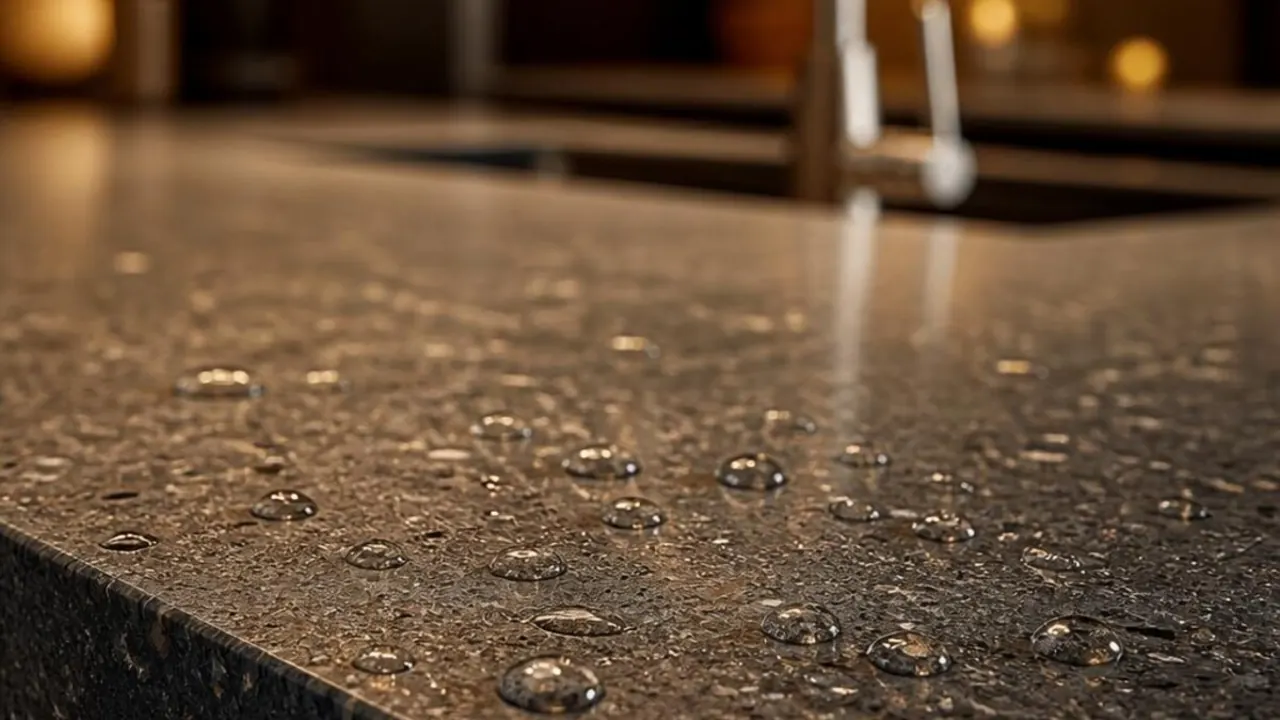
That low porosity explains why quartz skips the sealing conversation entirely. Marble, granite, and other natural stones need periodic sealing precisely because their pores are exposed to the air and to whatever gets spilled on them. Quartz's resin matrix closes that door during manufacturing, so there's no seal to maintain, no pores to fill, and no reapplication schedule to track. This is one reason quartz has become a popular low-maintenance alternative to natural stone in kitchens.
Low porosity is not the same as indestructible, though, and this is where quartz owners sometimes get the wrong idea. Quartz is not etch-proof. The resin binder can be damaged by strong acids, undiluted vinegar, certain drain cleaners, some oven cleaners, left sitting on the surface, leaving a dull spot even though the stone itself resists staining. Quartz is also not heat-proof. Setting a hot pan directly off the stove onto quartz can scorch or discolor the resin, and thermal shock from sudden temperature swings can cause cracking. So while quartz doesn't need sealing, it isn't immune to damage, which is why some quartz owners still look for an added layer of protection, particularly on high-use kitchen islands and bar tops where hot cookware and acidic ingredients are a daily reality.
Because quartz products vary, do not assume RAKU is compatible with quartz or that it protects against quartz's specific risks. No material-specific testing documentation is available here to support that claim. A quartz owner should follow the manufacturer's care guidance and obtain a professional assessment and written confirmation of product compatibility before considering any treatment.
It's worth being direct about the distinction: quartz and marble are different materials with different vulnerabilities, and a treatment suitable for one should not be assumed suitable for the other. If you're comparing surfaces or trying to understand how sealing works on natural stone in the first place, read our full guide to marble sealing for the full breakdown.
Sources for stone-care guidance
These references support general stone-care guidance, not Marble Armour product performance claims.
- Corian Quartz, Care & Maintenance — Manufacturer guidance for engineered quartz surfaces
Frequently Asked Questions
Can quartz countertops be damaged by acid?
Yes. While quartz resists staining, its resin binder can be etched or dulled by strong acids like undiluted vinegar or harsh oven and drain cleaners if left sitting on the surface too long.
Does quartz need to be resealed every year?
No. Quartz is engineered with a resin binder that closes off its pores during manufacturing, so it doesn't require the periodic resealing natural stones like marble need.
Is RAKU coating good for quartz?
Do not assume compatibility. Quartz formulations vary, and material-specific testing and a professional assessment should confirm suitability before any treatment is considered.