Travertine Floors and Nanocoating: Essential Insights
Explore the benefits of nanocoating for travertine floors. Learn how this technology enhances durability and appearance.
Explore the benefits of nanocoating for travertine floors. Learn how this technology enhances durability and appearance.
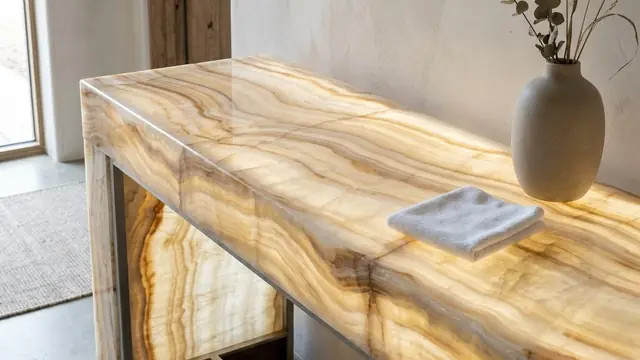
Discover essential tips on onyx care and protection to maintain the beauty of your home's most delicate stone with Marble Armour's expert guidance.
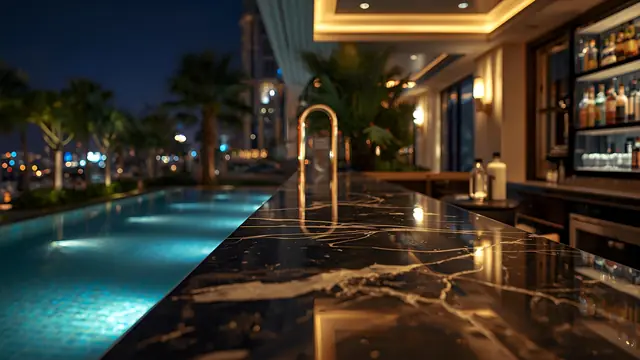
Explore the ROI of commercial stone protection in hospitality. Discover how Marble Armour enhances durability and aesthetics for better returns.
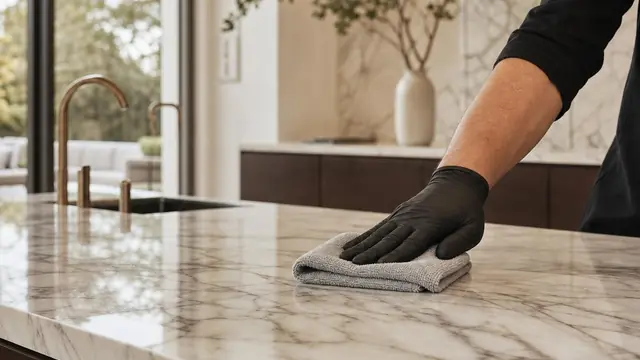
Discover how the one-day Marble Armour Application works to provide fast, efficient stone protection. Learn about the process and benefits today.
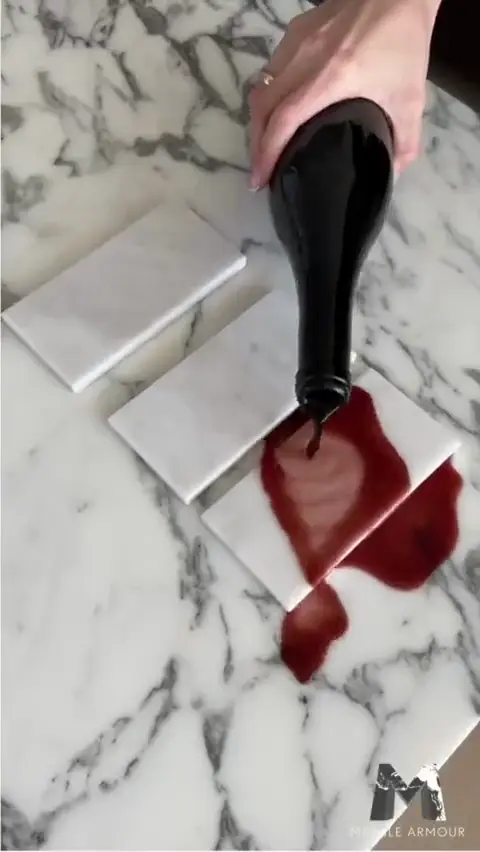
Discover how one-day nanocoating installation revolutionizes stone care with a quick, efficient process. Perfect for modern, premium stone protection.
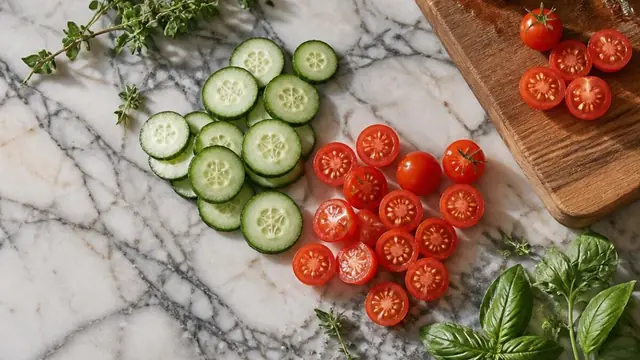
“Food-safe” is not enough information by itself to decide whether a particular treated stone surface is appropriate for a particular kind of food contact. The relevant answer depends on the exact product, its instructions, how it was applied and cured, and the way the surface will be used.
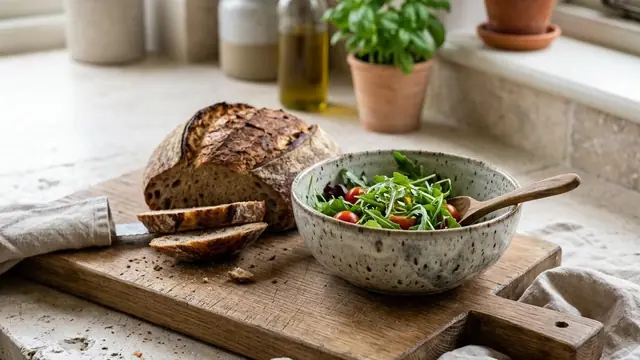
Before preparing food directly on a newly treated stone countertop, confirm the exact product instructions and supporting food-contact documentation. Do not assume that a surface is ready for food use because it looks dry, because a stated cure period has elapsed, or because a different product is described as food-safe.
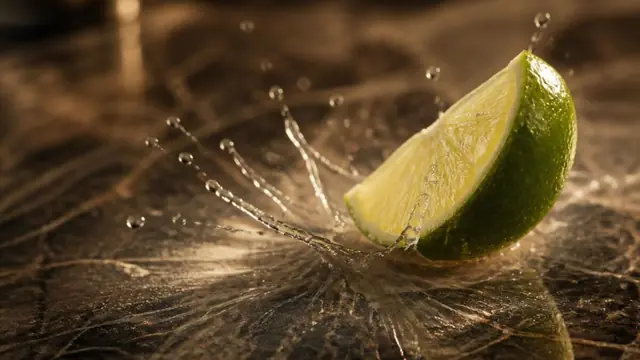
Marble etches when an acidic substance reacts with the calcium-carbonate minerals at its surface. The reaction can leave a dull or rough-looking mark that cleaning alone will not remove. Prevention starts with recognizing acidic products and using care suited to the particular stone and finish.
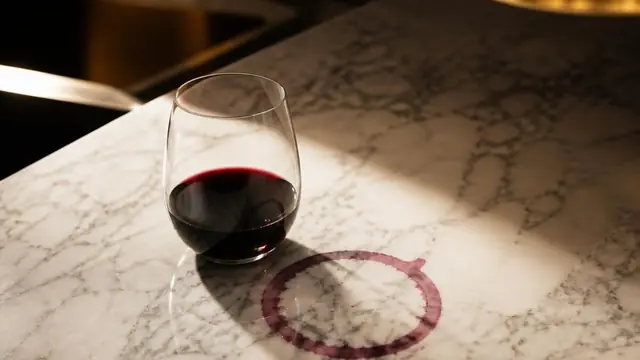
Yes, marble stains. It's a natural, porous stone made primarily of calcium carbonate, and that porosity means liquids such as wine, olive oil, coffee, citrus juice, and tomato sauce can soak into the surface and leave a discolored mark that won't wipe away. If you've ever left a wine glass sweating on a marble countertop overnight and found a dark ring the next morning, you've seen this firsthand.
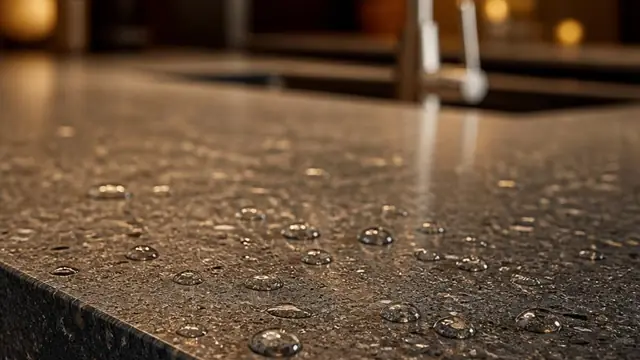
No, quartz countertops generally do not need sealing the way natural stone does. Engineered quartz is a manufactured composite, roughly 90 to 95 percent ground quartz mineral bound with polyester resin, and that resin binder fills in the microscopic gaps that make stones like marble porous. Without those open pores, there's no pathway for liquid to soak into the surface, which is exactly what sealing exists to prevent in natural stone. For most everyday spills, a quartz counter simply doesn't behave like marble or granite.
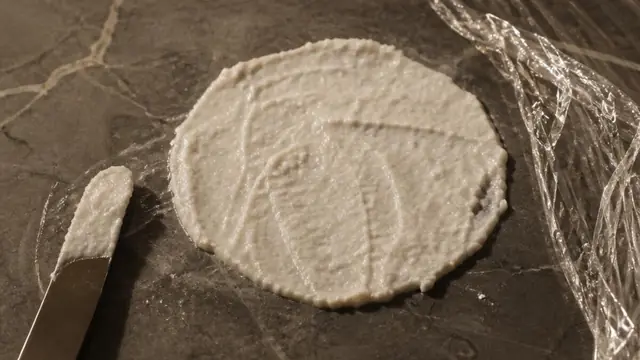
A red wine stain on marble can be removed if you act immediately. Blot, never wipe, the spill with a clean, dry cloth, rinse the area with plain water, then treat any remaining discoloration with a poultice. For light or white marble, a hydrogen-peroxide-based poultice left covered for 24 to 48 hours is the standard professional approach. For oil-based stains, a baking-soda-and-water poultice, or a commercial poultice product, works the same way. Marble is porous, so both wine and oil soak below the surface within minutes, which is why speed and the right method matter more than how much product you use.
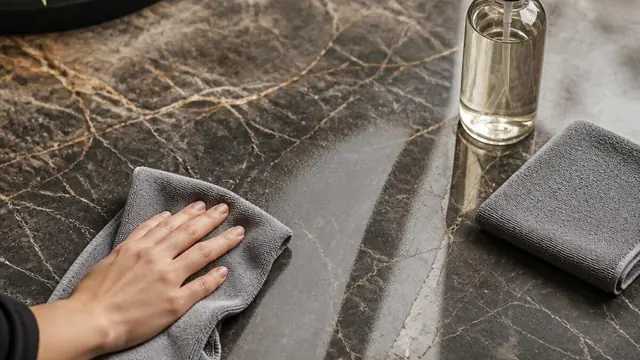
Marble countertop maintenance comes down to a simple routine: clean daily with a pH-neutral cleaner, wipe up spills the moment they happen, avoid acidic or abrasive products entirely, and reseal periodically if the stone relies on a traditional sealer rather than a treatment intended for longer service life. Marble is a soft, porous stone, so the point of any maintenance routine is preventing liquids and abrasives from ever having enough contact time to etch or stain the surface.
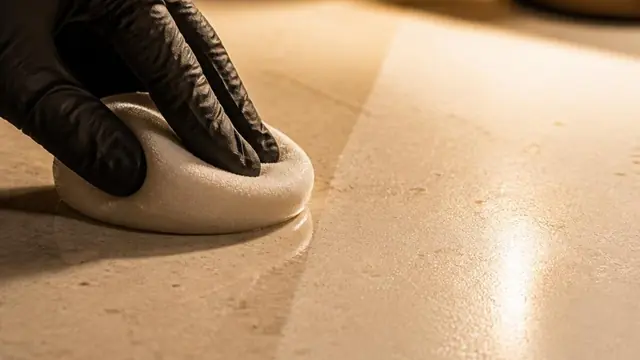
If you're searching for how to seal quartz countertops, here's the direct answer: engineered quartz is a low-porosity resin-and-stone composite, so it generally does not require traditional sealing the way natural stone does. That said, quartz is not immune to damage. Acid etching from citrus, vinegar, and certain cleaners can dull the surface. Solvents like nail polish remover or paint thinner can soften or discolor the resin binder. Sustained heat from pans or slow cookers can scorch or crack it. In practice, sealing quartz isn't about closing pores. It's about adding a protective layer against these specific threats.
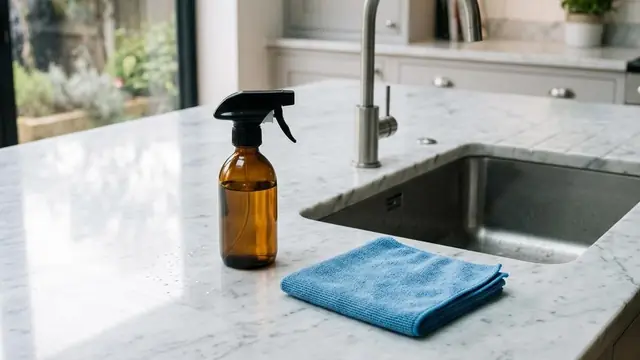
No, sealing marble does not prevent etching. A sealer works inside the stone's pores, while etching happens on the surface, so a sealed countertop is just as vulnerable to acid damage as an unsealed one.
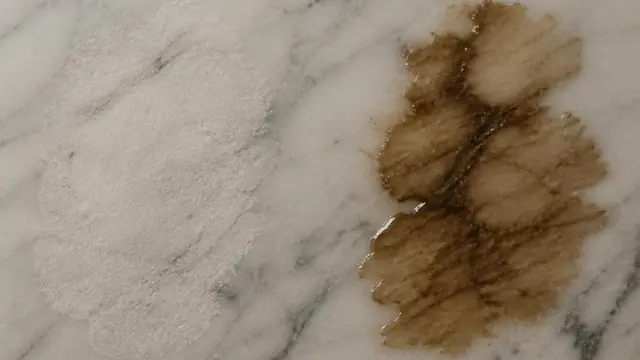
Etching is a chemical burn: acid dissolving the calcium carbonate at the surface, leaving a permanent dull or rough mark. Staining is a physical absorption issue: a liquid soaking into the stone's pores and discoloring it, which is sometimes reversible. Both fall under the umbrella of what is etching on marble damage, but they are caused by different things and fixed in different ways, so telling them apart matters before you try to treat either one.
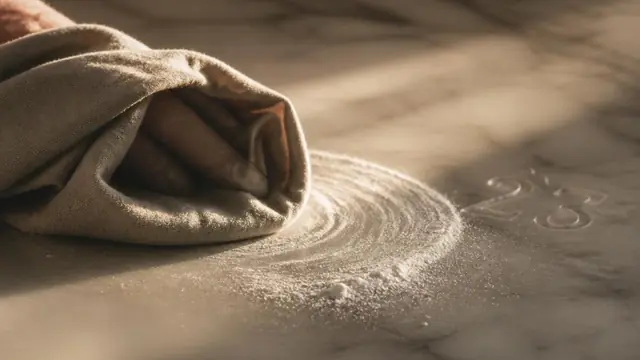
If you're searching for how to fix etched marble, here's the direct answer: an etch mark cannot be reversed or healed. It's permanent damage caused by an acid dissolving a thin layer of your marble's calcium carbonate, and no product on the market restores that dissolved stone. What you can do is visually improve most etch marks through polishing, and permanently prevent new ones from forming. Here's how to handle both.
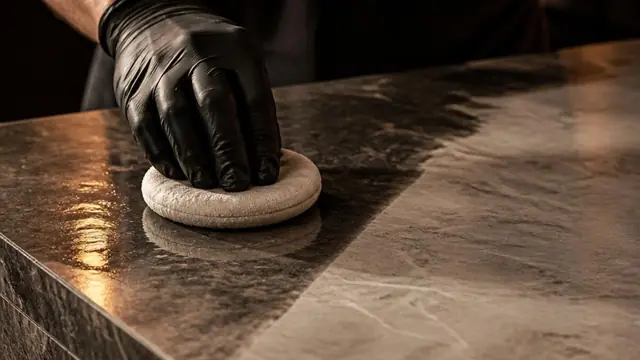
Marble etching occurs when acid reacts with calcium-carbonate stone at the surface. If you are considering RAKU or another treatment for this risk, ask for product-specific evidence rather than assuming a general stone-care claim proves how the product performs on your marble.
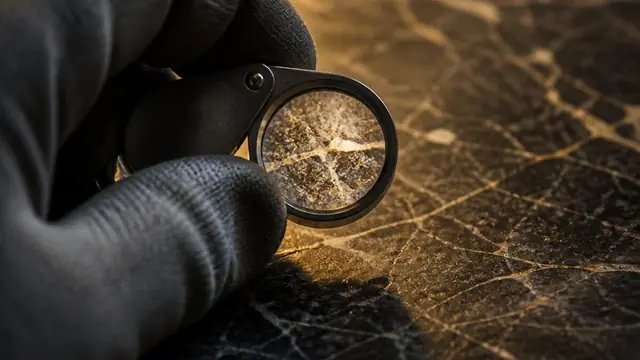
Discover common stone protection myths and facts as Marble Armour experts debunk misconceptions, ensuring lasting care for your premium surfaces.
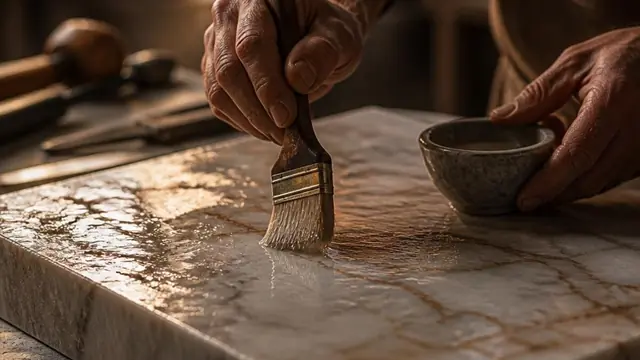
Explore the Italian craftsmanship behind RAKU by Lantania, a premium solution for stone protection blending tradition with cutting-edge innovation.
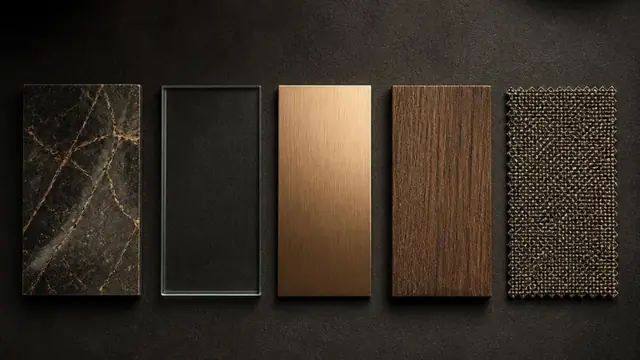
Discover the top 5 surfaces that benefit most from nanocoating protection. Enhance durability, aesthetics, and longevity with advanced stone care.

Learn how to protect marble in high-traffic restaurant environments with expert strategies and premium stone care solutions for lasting durability.
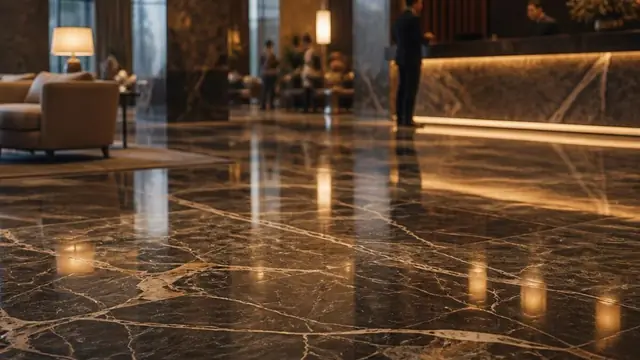
Discover why top luxury hotels are adopting RAKU nanocoating for superior stone protection, durability, and long-term cost savings.
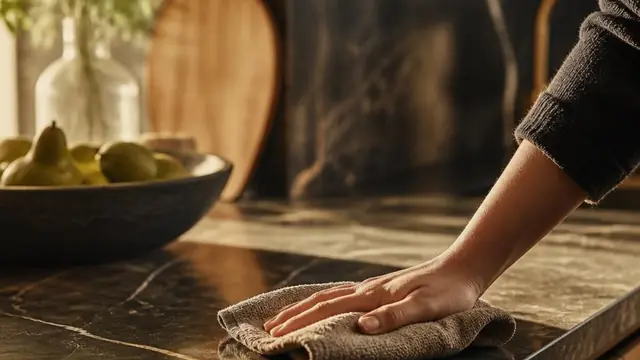
Discover essential care tips for marble kitchen countertops to maintain their elegance and longevity. Protect your investment with expert advice.