Daily
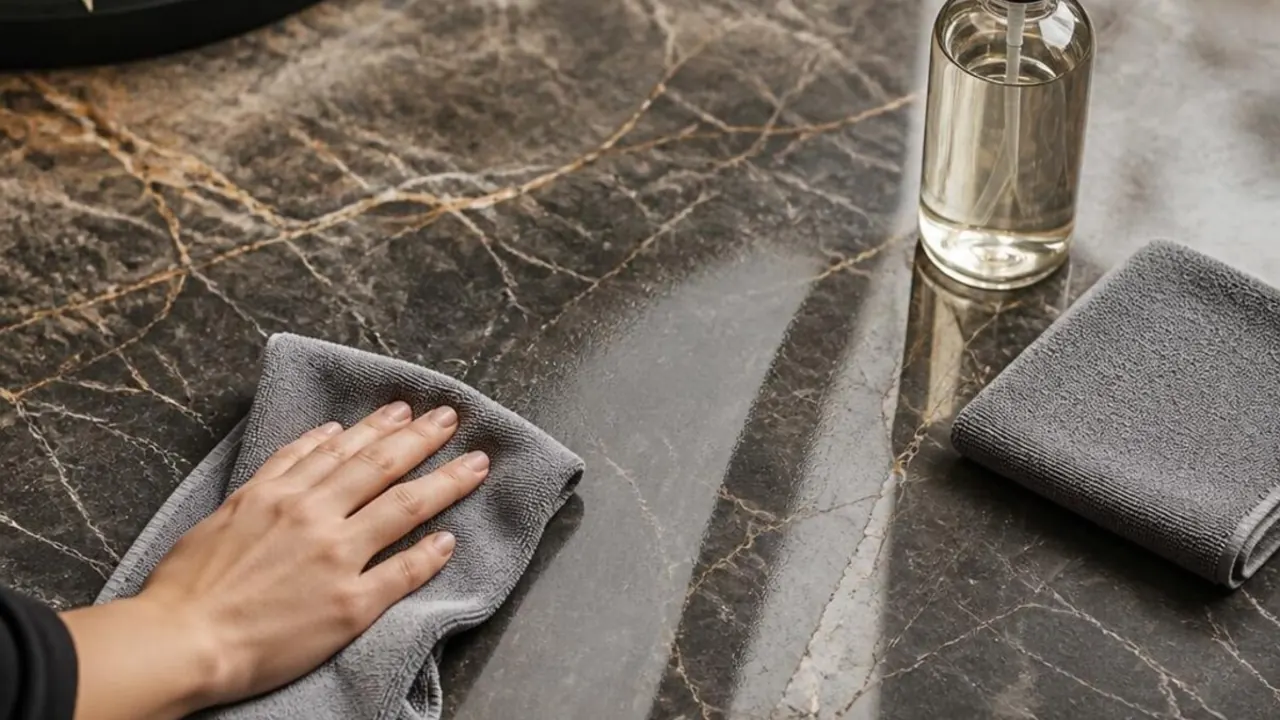
Wipe up spills immediately. Wine, coffee, citrus juice, and cooking oil are the most common culprits, and porous stone absorbs them within minutes. Clean visible surfaces with a pH-neutral stone cleaner, or a few drops of mild dish soap in warm water. Skip anything labeled "multi-surface" unless it specifically states it's safe for marble. Use coasters under glasses and trivets or trays under hot pans, appliances, and toiletries. Marble doesn't need direct heat to etch. It needs contact with anything acidic.
Weekly
Do a full wipe-down with a pH-neutral cleaner and a soft microfiber cloth, working in one direction rather than scrubbing in circles. Check for dullness or faint etch marks around sinks, stovetops, and bar areas, where acidic exposure is most frequent. Dry the surface fully after cleaning. Standing water and lingering moisture are what allow etching and staining to progress.
Yearly
If your marble relies on a traditional sealer, plan on resealing every one to three years, depending on traffic and the manufacturer's rating. Test absorbency periodically: a few drops of water that darken the stone within a few minutes signal the seal has worn through. Inspect for hairline etching, especially in kitchens, and have a fabricator or restoration professional address it before it spreads. Reassess your cleaning products. Formulations change, and it's worth confirming nothing acidic has crept into your routine.
Why Maintenance May Change With a Nanocoating
Most marble maintenance exists to compensate for one fact: the stone is porous, and a traditional sealer only sits in those pores temporarily. It wears down with normal use and needs reapplication every one to three years, and until it's renewed, the stone is vulnerable to every spill and acidic splash.
RAKU nanocoating may reduce absorption when a certified installer determines it is suitable for the particular stone and use case. Application and cure timing should be confirmed by the applicator; an approximate six-day cure is expected. Service life is expected to be about 10 years residentially and 3–5 years commercially, not guaranteed. The treatment does not eliminate the need for prompt spill cleanup, appropriate products, or professional reassessment, and no food-contact certification or specific heat rating is documented here.
If you're deciding between reapplying a sealer indefinitely or protecting the stone once, it's worth comparing marble sealing options before your next reseal is due.
Sources for stone-care guidance
These references support general stone-care guidance, not Marble Armour product performance claims.
- Natural Stone Institute, Care & Cleaning of Natural Stone — Stone cleaning, stains, poultices, sealing and acid etching
Frequently Asked Questions
What should you never use to clean marble?
Never use vinegar, lemon juice, or other acidic cleaners on marble; they etch the surface almost instantly. Avoid abrasive scrubbers, powdered cleansers, and bleach or ammonia-based products, which can dull the finish or discolor the stone over time.
How often should marble countertops be resealed?
Traditional sealers typically need reapplication every one to three years, depending on the product and how much daily wear the surface sees. A quick water-absorption test, watching whether a few drops darken the stone, shows whether it's time to reseal.
Does RAKU coating reduce marble maintenance?
It may reduce absorption and maintenance when professionally assessed and applied to a suitable marble surface, but it does not eliminate prompt spill cleanup or appropriate care. Confirm the cure period, care instructions, and expected service life with the applicator.