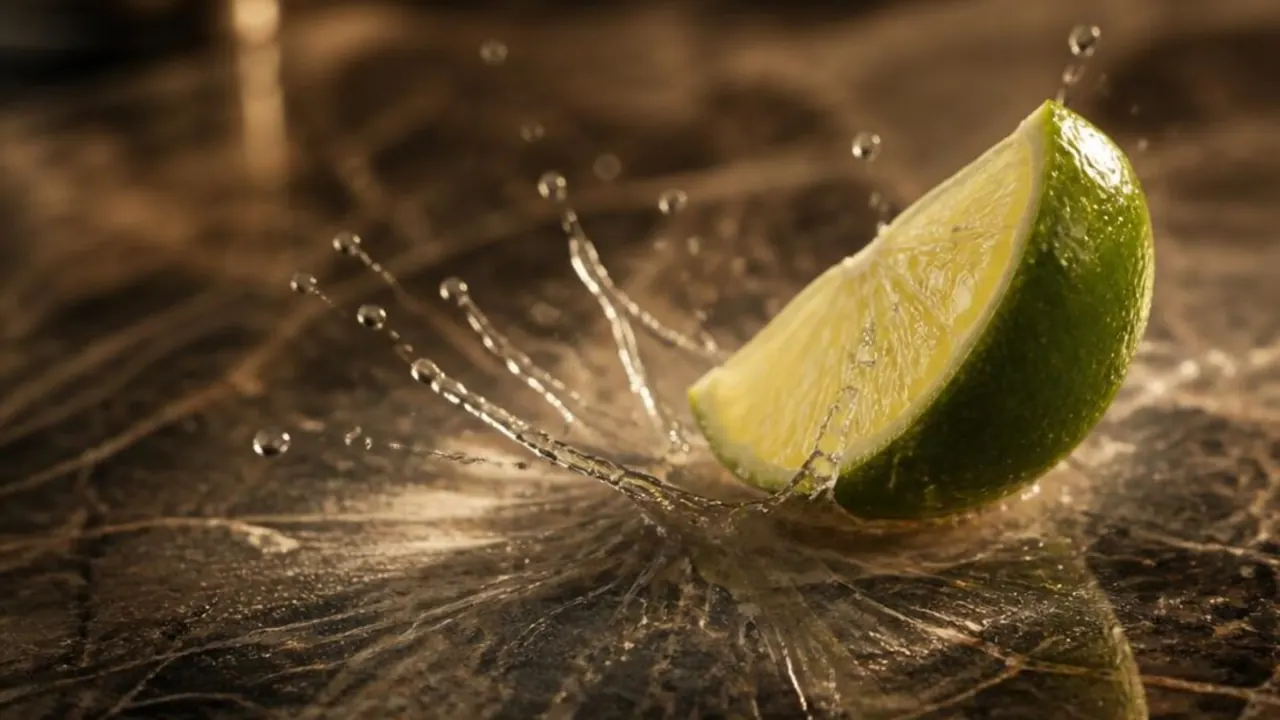
Etching is different from staining
An etch mark is a change to the stone's surface, while a stain is discoloration associated with material entering the stone. The two can look similar at first. A surface that looks dull under angled light or feels different may have been etched; a darkened area may be a stain. If the cause is uncertain, have a stone-care professional inspect it before trying a remedy.
Etching is not limited to dramatic spills. Common acidic foods and household products can affect calcium-based stone. Vinegar, citrus, and some cleaners are examples; product labels and stone-care guidance should be checked before use. Do not test an unfamiliar substance on a visible surface.
Practical prevention
- Use a cleaner labeled for the specific stone and finish. Avoid vinegar, lemon juice, and other acidic cleaners on marble.
- Blot spills promptly with a soft cloth rather than scrubbing. Follow the stone supplier's care instructions for the type of spill.
- Use coasters, trays, or cutting boards where drinks, food, or other acidic items are handled.
- Keep abrasive pads and powders away from polished finishes unless a qualified stone professional recommends them for a particular task.
- Ask a restoration professional to assess existing etching. A surface treatment should not be assumed to repair damage that is already present.
If you are considering a protective treatment
Traditional impregnating sealers are generally intended to reduce liquid absorption and staining; that is a different issue from acid reacting with the stone surface. Before choosing any product advertised for etch protection, ask for test documentation that names the specific product and addresses acid exposure on the relevant stone and finish. Confirm application conditions, care instructions, and warranty limitations in writing.
No claim about a product's performance should be inferred from general guidance about marble or from a seller's description alone. For general stone-care information, see the Natural Stone Institute's Care & Cleaning of Natural Stone guidance. For an individual surface, follow its fabricator's instructions or seek a qualified stone-care assessment.
read our full guide to marble etching
Sources for stone-care guidance
These references support general stone-care guidance, not Marble Armour product performance claims.
- Natural Stone Institute, Care & Cleaning of Natural Stone — Stone cleaning, stains, poultices, sealing and acid etching